Samples are the best first step when choosing natural stone online. They allow you to review the general tone, finish and character of a material before placing a larger order.
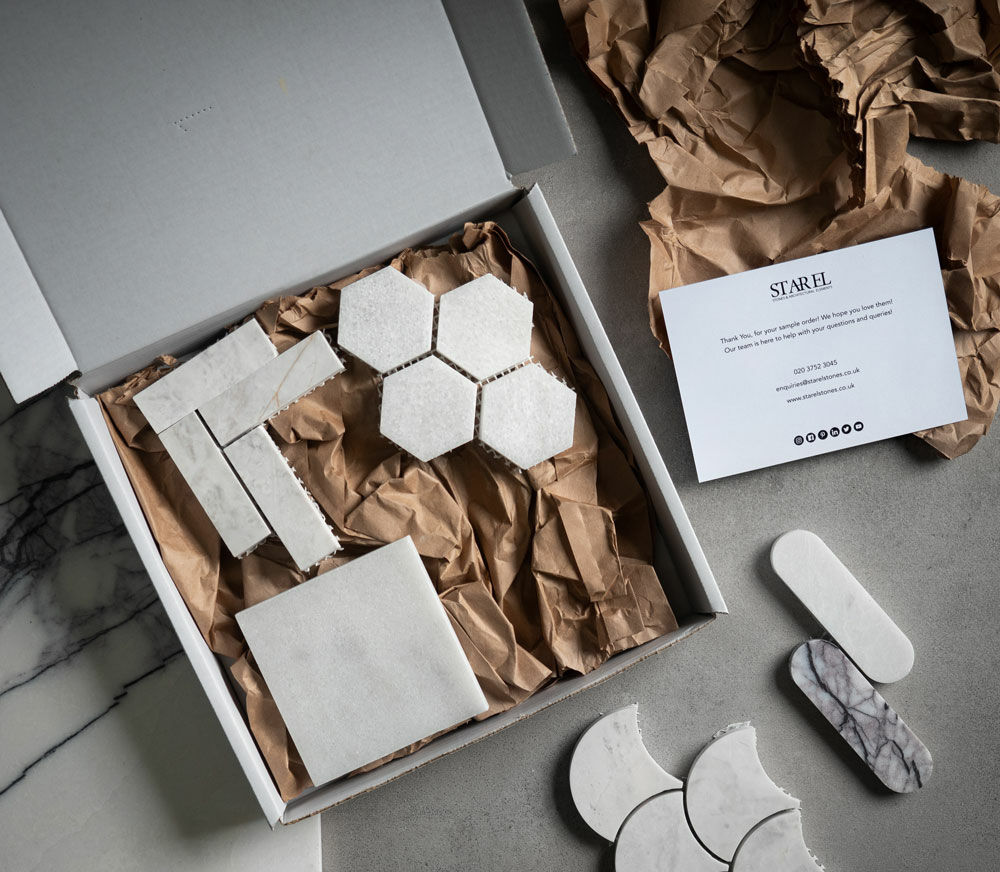
Because marble and natural stone are naturally varied, your sample should be treated as a guide rather than an exact match. Veining, tone, movement and surface detail can differ between batches, blocks and future stock. This guide explains how to use samples properly, what they can tell you, what they cannot guarantee, and how to move from sample to full order with more confidence.
Natural stone should be seen and handled before you commit to a larger quantity. A sample helps you understand the material in a more practical way than a product image can.
A sample can help you assess:
This is especially important for marble tiles, mosaics, travertine, limestone and any stone where natural movement is part of the design. A sample helps you decide whether the material belongs in the space, but it should not be used as a promise that every tile or slab will look exactly the same.
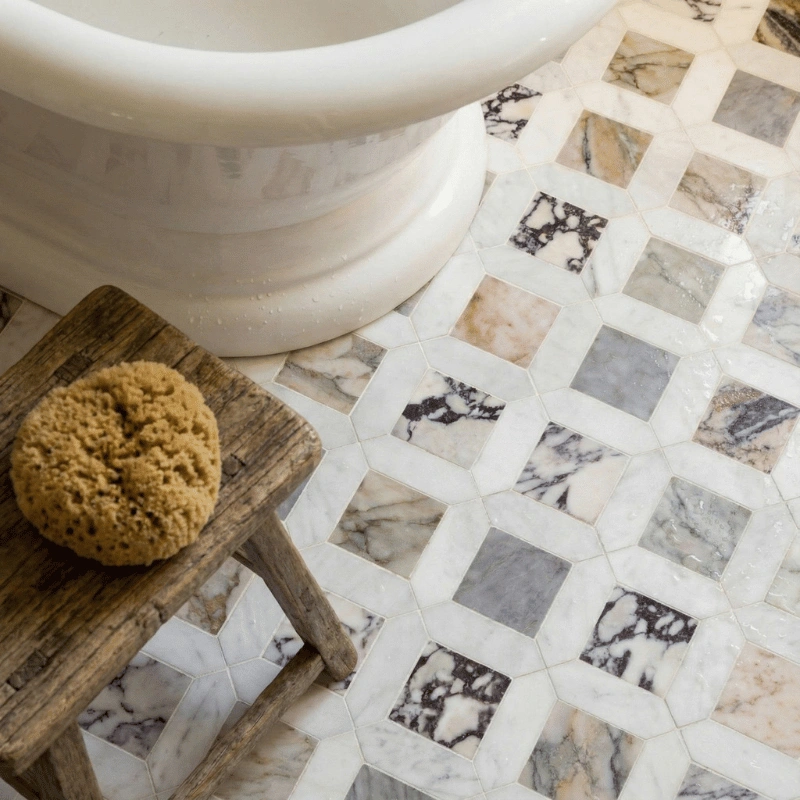
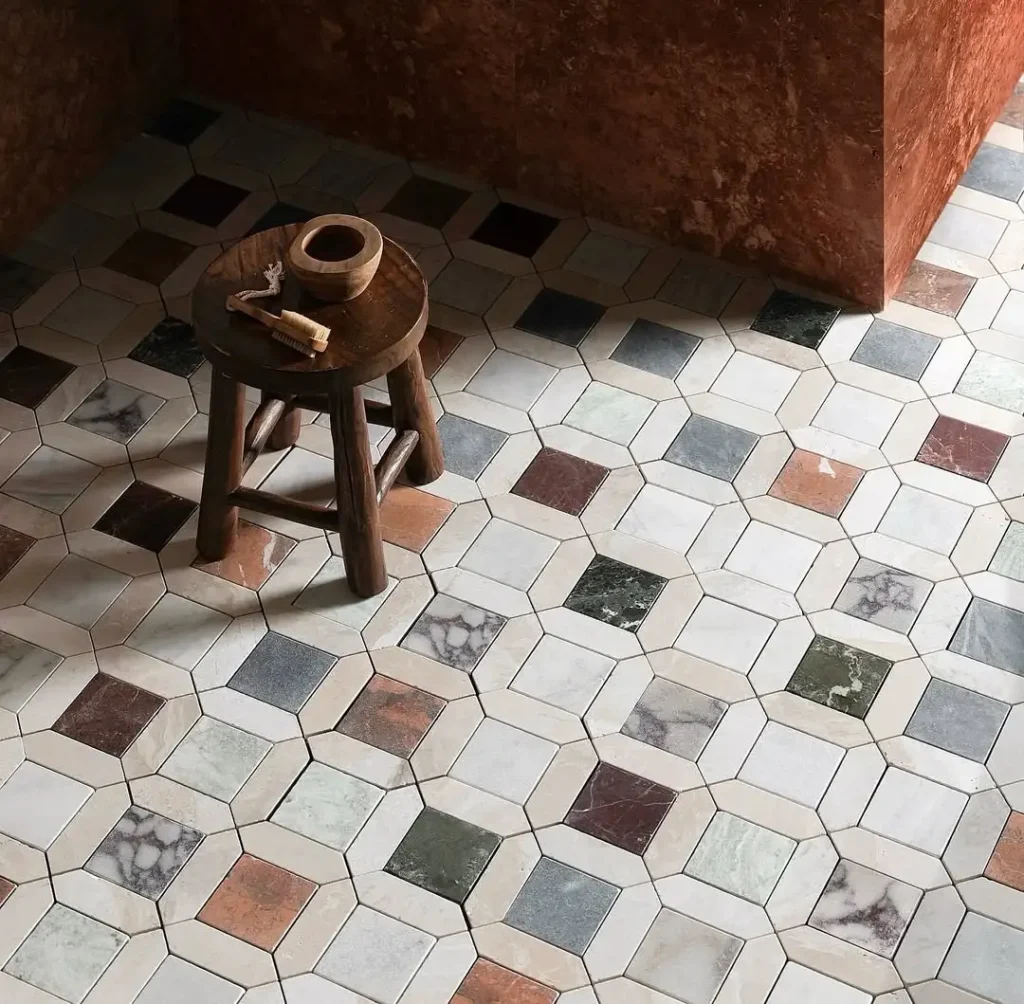
A sample gives you a useful indication of the stone family. It can show whether the material feels warm or cool, whether the finish is polished, honed, tumbled or textured, and whether the stone has strong or subtle movement.
For tiles and mosaics, samples are helpful for comparing different colours, finishes and formats before choosing a full order. For example, a white marble sample may help you decide between a clean, bright look and a warmer, creamier stone. A mosaic sample can help you understand pattern scale, grout spacing and how the material may work in a bathroom, cloakroom, splashback or feature area.
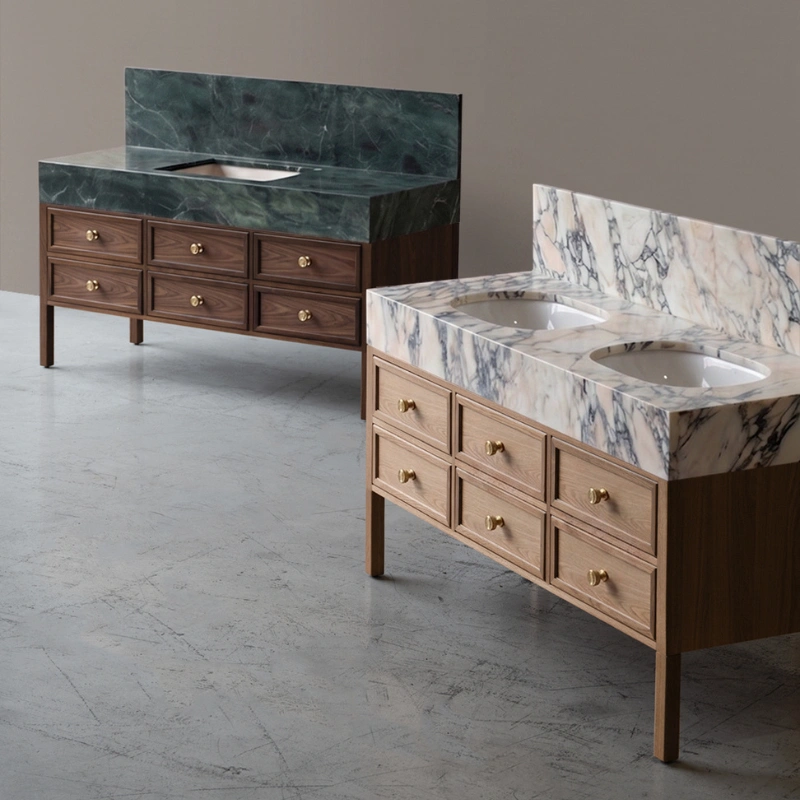
For customers planning a complete room, samples should be compared against the other materials in the scheme. Look at the sample next to cabinetry, flooring, wall colour, taps, handles, fabrics and lighting. Stone changes in different light, so review it in the actual room where possible.
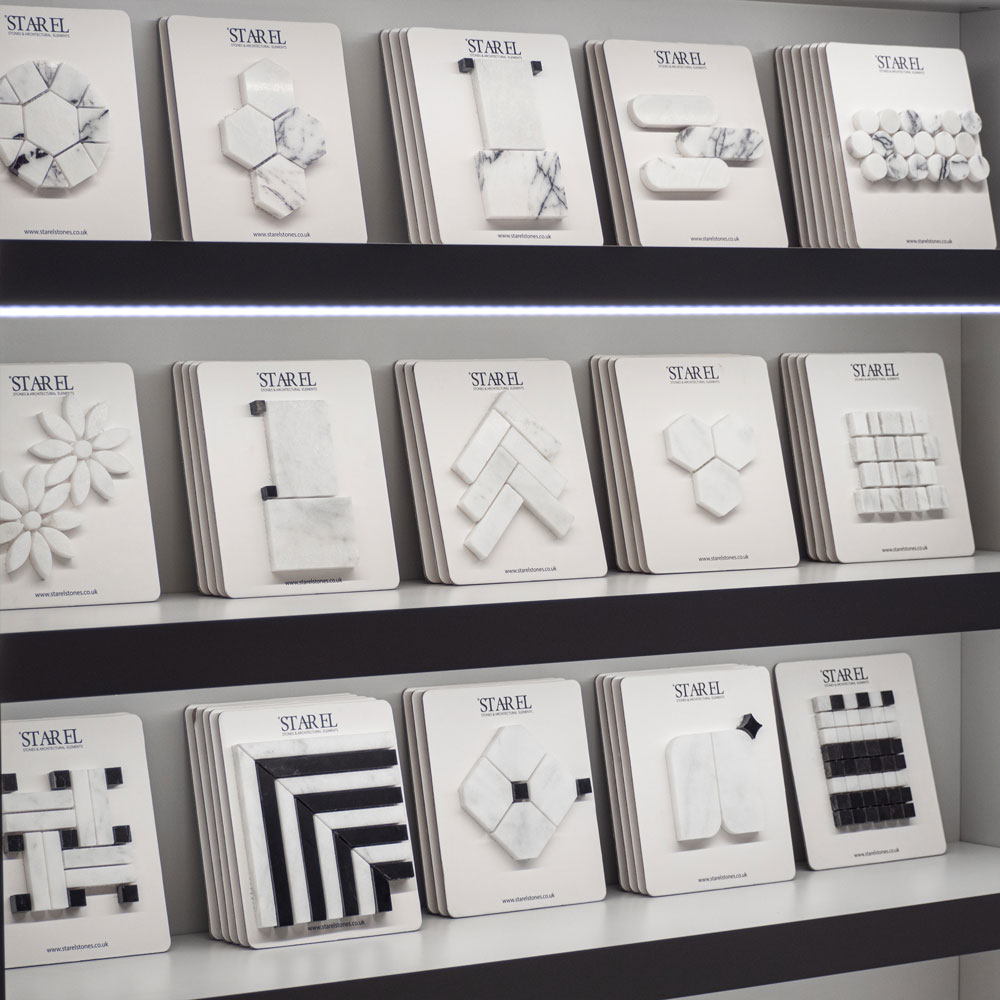
A sample cannot guarantee exact colour, veining, markings, movement or batch consistency across a future order. Natural stone is cut from blocks formed over time, and no two sections are identical.
A sample may not show:
This is not a fault. It is the nature of real stone. Customers choosing natural stone should expect variation and plan for it intentionally.
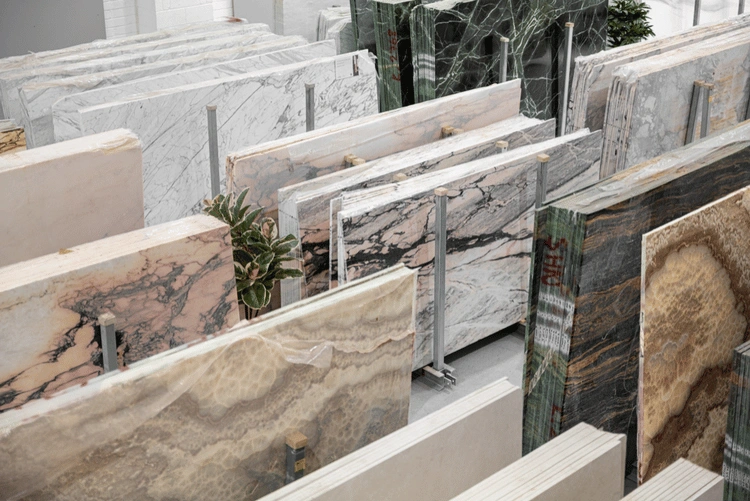
For slabs, cut samples may not be available or may not be useful. A small piece of stone cannot properly represent a full marble, travertine or onyx slab. Where slab appearance matters, we recommend viewing the exact slab in person or requesting detailed photographs and video.
View samples in the space where the product will be installed. Natural light, artificial light and surrounding colours can all change how stone appears.
A good sample review process is simple:
Once you have chosen a material, measure the space carefully and speak to your installer before placing the full order. The installer should confirm quantity, layout, cuts, wastage, substrate preparation, sealing and suitability for the intended area.
For most tile projects, allow additional material for cuts, waste, breakage and future repairs. A common allowance is 10–15%, although more may be needed for complex layouts, mosaics, diagonal patterns, herringbone, large-format tiles, bespoke products or batch-sensitive stone.
If you are ordering for a larger project, avoid long delays between sampling and purchasing. Stock can change, batches can sell through and later orders may not match the sample as closely.
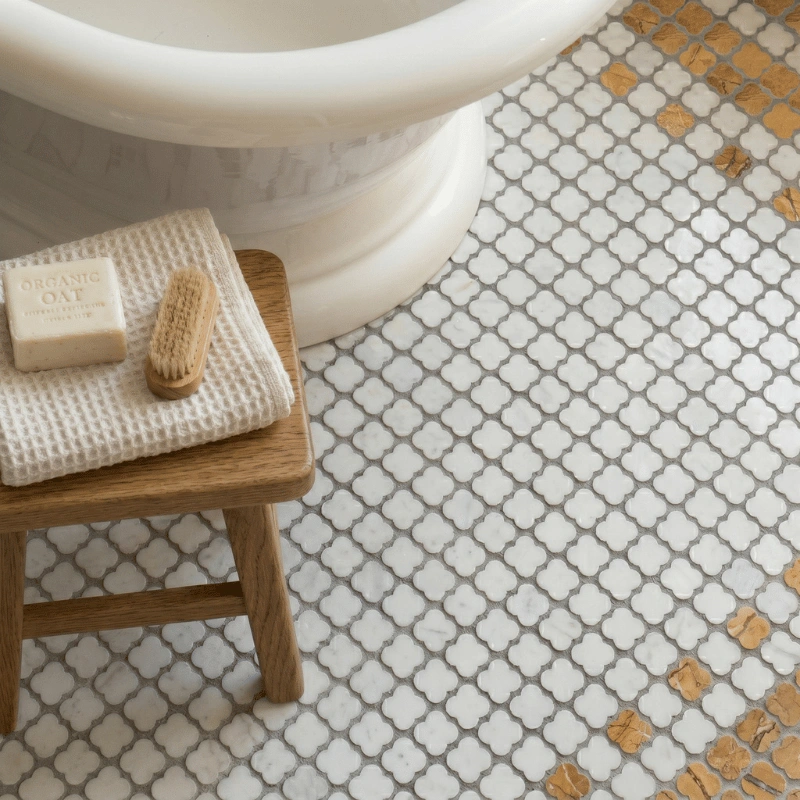
Batch matching is important with natural stone. If you need consistency across one room or several connected areas, order the full required quantity at the same time wherever possible.
Separate orders may come from different batches, blocks or production runs. This can lead to differences in tone, veining, thickness, finish or surface character. Even when the material name is the same, natural stone can vary.
For multi-room projects, trade projects or larger developments, speak to the Starel team before ordering. We can help review stock, advise on availability and guide you on whether the material is suitable for the scale of the project.
Once you have selected your preferred sample, confirm the product with your installer, calculate the required quantity, allow for wastage and place the full order while stock is available. For natural stone, ordering early and ordering the full amount together gives you the best chance of batch consistency.
Backorder products are available to order, but are not currently held for immediate dispatch.
These items usually have a lead time of 6–12 weeks. Minimum order quantities may also apply on selected products.
Once your order is placed, we will reserve your item and keep you updated on availability. If you are working to a specific deadline, please contact us before ordering.
Learn more about backorders and delivery terms by reading our Delivery Policy, or Contact Us before ordering if you need more help.